Why Walking 10,000 Steps Daily Isn't Enough: The Hidden Health Risks Every Traveler Faces
David Park
02/16/2026
4 min read
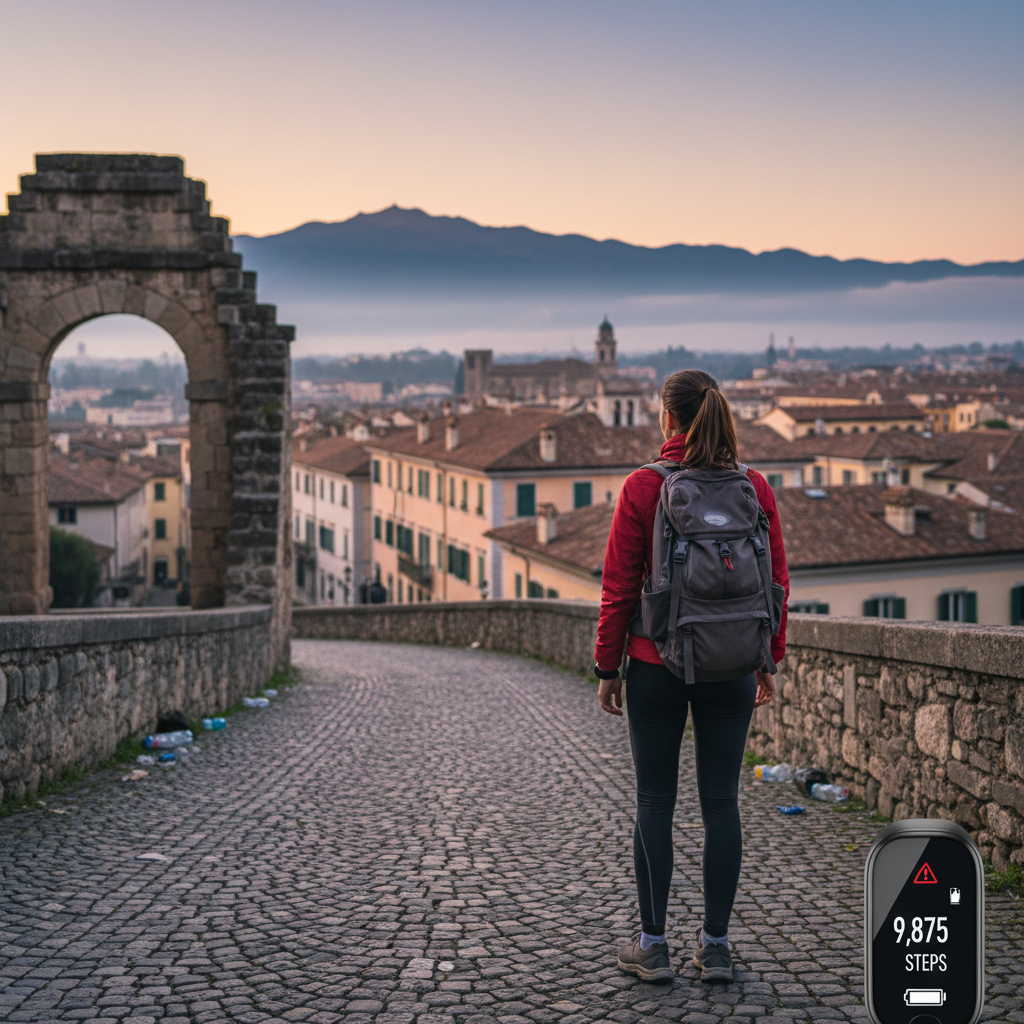
A recent study from Harvard Medical School found that women who walked just 4,400 steps per day had a 41% lower risk of premature death compared to those walking 2,700 steps. Yet here's what most travel health advice gets wrong: hitting your step count while exploring Rome or Bangkok doesn't protect you from the specific musculoskeletal problems that plague frequent travelers.
The 10,000-step rule has become gospel for health-conscious travelers. You'll see tourists frantically checking their fitness trackers after climbing Machu Picchu or walking through Times Square. But this singular focus on step count creates a dangerous blind spot that leaves travelers vulnerable to injury and chronic pain.
The Step Count Myth That's Hurting Travelers
The 10,000-step target originated from a 1960s Japanese marketing campaign for a pedometer called "manpo-kei" (which literally means "10,000 steps meter"). Dr. I-Min Lee's research at Harvard showed that health benefits plateau around 7,500 steps for older adults, yet the travel industry continues pushing this arbitrary number.
Here's the problem: step count ignores movement quality entirely. When you're dragging a 50-pound suitcase through an airport or carrying a heavy backpack for hours, those steps create very different stresses on your body than a leisurely neighborhood walk.
A 2019 study published in the Journal of Transport & Health found that travelers who focused solely on daily step goals had 23% higher rates of lower back pain and knee problems compared to those who incorporated varied movement patterns.
What Really Breaks Down During Travel
Your body faces three specific challenges while traveling that regular walking can't address:
Prolonged Static Positioning Sitting in cramped airplane seats or car rides for hours creates hip flexor tightness and thoracic spine stiffness. The Mayo Clinic reports that prolonged sitting increases pressure on spinal discs by up to 40% compared to standing.
Unilateral Loading Patterns Carrying luggage on one side, wearing a cross-body bag, or pulling a wheeled suitcase creates asymmetrical muscle activation. This leads to compensatory movement patterns that persist long after your trip ends.
Surface and Footwear Changes Walking on cobblestones in Prague, sand in Bali, or concrete sidewalks in New York while wearing different shoes than usual changes your gait mechanics and foot strike patterns.
The 3-Component Movement System Every Traveler Needs
Component 1: Mobility Maintenance
Travel destroys your normal movement patterns within 24 hours. Research from the American Physical Therapy Association shows that hip flexor length decreases by 6% after just four hours of continuous sitting.
Prioritize these specific movements:
- Hip flexor stretches every 2 hours during long travel days
- Thoracic spine rotations to counter forward head posture
- Ankle circles and calf raises to maintain circulation
Do this consistently, not just when you "feel tight."
Component 2: Load Distribution
This is where most travelers fail completely. You need to actively vary how you carry and move with luggage.
Switch your bag or suitcase between sides every 10-15 minutes. Use a backpack with a waist belt for walks longer than 30 minutes. When possible, distribute weight across multiple smaller bags rather than one large piece.
The goal isn't to eliminate carrying things - it's to prevent your body from adapting to asymmetrical patterns.
Component 3: Surface Adaptation
Your feet and ankles need time to adapt to new walking surfaces. Start with shorter distances on unfamiliar terrain, then gradually increase.
Wear supportive shoes for the first few days in a new destination, even if you planned to go more minimalist. Your proprioceptive system needs 48-72 hours to recalibrate to different ground conditions.
Why Most Travel Fitness Advice Misses the Mark
Travel blogs and fitness apps treat your body like a simple step-counting machine. They ignore the fact that travel creates unique biomechanical stresses that don't exist in your normal routine.
Walking 15,000 steps through Barcelona while carrying an unbalanced load and wearing new shoes isn't "extra healthy" - it's a recipe for overuse injuries.
The Centers for Disease Control and Prevention recommends 150 minutes of moderate aerobic activity weekly, but they don't specify that all movement should be walking. Variety matters more than volume, especially when traveling.
The Surprising Truth About Rest Days
Here's what contradicts most travel advice: you need planned recovery days, even on vacation.
Active recovery doesn't mean lying by the pool (though that has its place). It means choosing lower-impact activities like swimming, gentle yoga, or exploring museums instead of another 8-hour walking tour.
Professional athletes periodize their training because the human body adapts through stress and recovery cycles. Your vacation shouldn't be a week-long physical stress test.
Building Anti-Fragile Travel Habits
The goal isn't to survive your travels without pain - it's to return home physically better than when you left.
Start incorporating movement variety into your regular routine at least two weeks before major trips. Practice carrying luggage with different loading patterns. Walk on various surfaces wearing your travel shoes.
Your body will thank you when you're hiking the Inca Trail or walking through European cities for hours.
Your Next Trip Starts Now
Stop measuring travel fitness success by step count alone. Instead, ask yourself: "How do I feel after moving for several hours today?" If the answer involves pain, stiffness, or fatigue beyond normal tiredness, your movement strategy needs work.
The best travelers aren't the ones who walk the most - they're the ones who move the smartest.
More Trending Articles


Why Singapore's Shopping Malls Generate More Revenue Per Square Foot Than Any City on Earth
Michael Thompson
02/16/2026

The $127 Secret: How Shopping in Airport Duty-Free Stores Actually Costs You More Than Downtown
Jennifer Walsh
02/16/2026