The Cashback Credit Card Trap: Why Your 'Rewards' Card Is Costing You Money
Jennifer Walsh
02/16/2026
5 min read
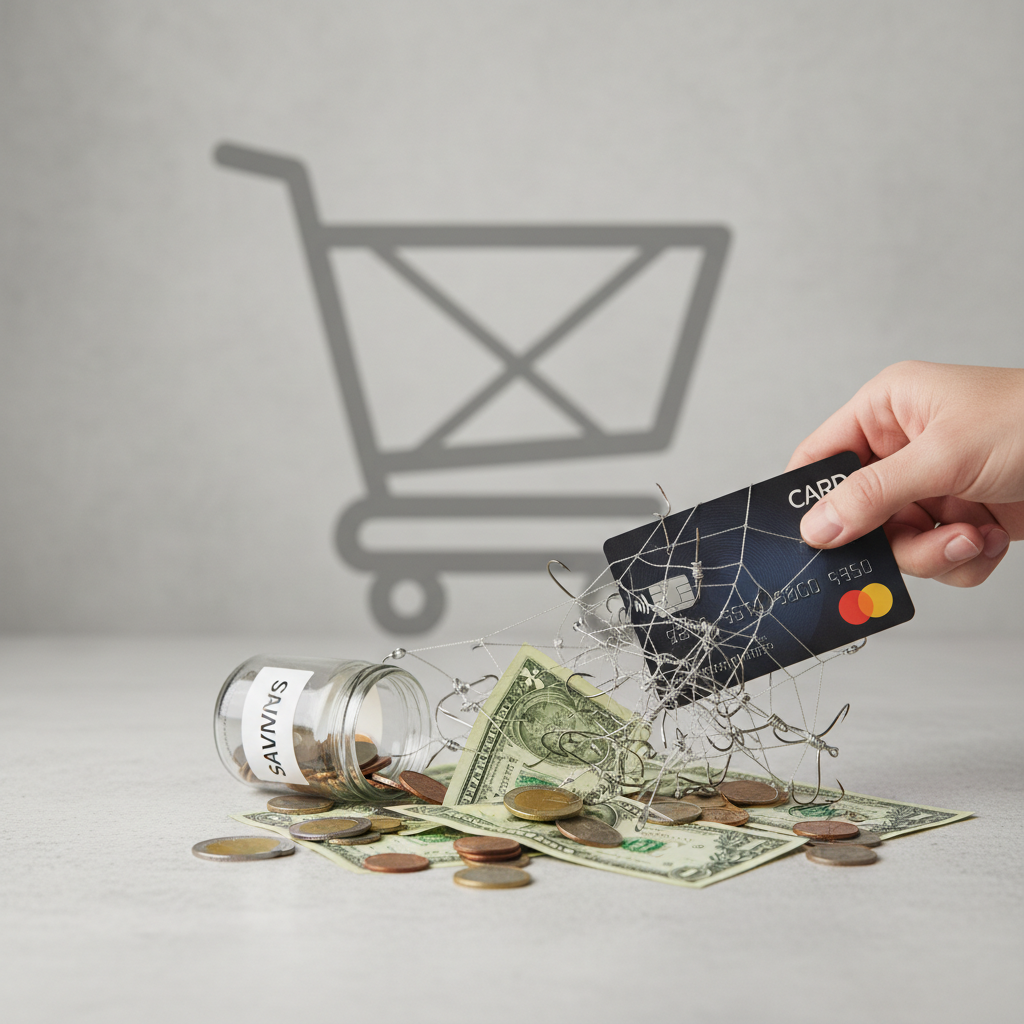
Target's RedCard promises 5% off every purchase. Amazon's Prime Visa boasts 5% back on Amazon purchases. Chase Freedom Flex rotates quarterly 5% categories. The credit card companies want you to believe these cashback rewards are free money, but the math tells a different story.
The Real Cost of Cashback Cards
Here's what the credit card industry doesn't want you to know: cashback rewards are funded by higher prices across the board. When merchants pay credit card processing fees of 1.5% to 3.5% per transaction, they pass those costs directly to consumers through higher retail prices.
The Federal Reserve Bank of Boston published research showing that cash users effectively subsidize credit card rewards programs. Every time someone pays cash, they're paying the inflated prices that account for credit card fees, but they receive zero rewards in return.
This creates a perverse incentive. You almost have to use a rewards credit card just to break even on the artificially inflated prices.
Why Store Cards Are the Worst Offenders
Store-branded credit cards like the Target RedCard or Macy's Star Rewards card seem like no-brainers. Save 5-20% every time you shop at your favorite store? Sign me up, right?
Wrong.
These cards trap you into shopping at one retailer when better deals exist elsewhere. I've watched friends justify buying a $40 sweater at Target with their 5% RedCard discount instead of buying the identical sweater for $28 at Walmart. They saved $2 with their "reward" but overpaid by $10 compared to shopping around.
Store cards also carry brutal interest rates. Target's RedCard charges 27.95% APR as of 2024. Macy's Star Rewards? 28.99% APR according to their current terms. Miss one payment, and your "rewards" get wiped out instantly.
The Annual Fee Math That Doesn't Add Up
Premium cashback cards love to advertise their generous reward rates while burying the annual fees in fine print. The Chase Sapphire Preferred charges $95 annually for 2x points on travel and dining. The Capital One Venture X costs $395 per year despite its travel rewards.
Here's the brutal reality: you need to spend $4,750 on bonus categories just to break even on the Chase Sapphire Preferred's annual fee (assuming 2x points worth 1% each). Most cardholders never hit that threshold.
A 2019 study by Bankrate found that 37% of rewards credit card users don't earn enough rewards to justify their annual fees. They're literally paying for the privilege of getting less money back than they put in.
The Psychological Spending Trap
Cashback rewards trigger a psychological phenomenon called "payment depreciation." MIT researchers Drazen Prelec and Duncan Simester discovered that people spend 12-18% more when using credit cards compared to cash. The reward points make spending feel less painful, not more rewarding.
I see this constantly with deal hunters who chase 5% cashback on rotating categories. They'll drive to three different gas stations during Q4 to maximize their Chase Freedom Flex rewards, spending extra time and gas money to earn $2.50 in cashback. Meanwhile, they're missing out on the gas station across town that's 15 cents per gallon cheaper with no credit card required.
When Rewards Cards Actually Make Sense
I'm not completely anti-rewards. Some scenarios genuinely benefit from cashback cards, but they're rarer than you think.
First, you must pay your balance in full every single month. Credit card interest rates average 21.47% according to the Federal Reserve. No cashback reward can overcome those interest charges.
Second, the card needs to match your existing spending patterns, not create new ones. If you already buy groceries at the same store every week, a grocery rewards card might work. But don't change your shopping habits to chase rewards.
Third, focus on flat-rate cashback cards over rotating categories. The Citi Double Cash gives 2% on everything with no annual fee and no mental gymnastics about which quarter offers bonus points on what category.
The Better Alternative: Cash Discount Programs
Here's what actually saves money: shopping at businesses that offer cash discounts. Many gas stations charge 5-10 cents less per gallon for cash payments. Small retailers often negotiate 3-5% discounts for cash purchases since they avoid credit card processing fees.
Some forward-thinking businesses have started advertising their cash prices separately from credit prices. Arco gas stations have done this for decades, and their cash prices consistently beat competitors' credit card prices even after factoring in rewards.
The Inconvenient Truth About Points and Miles
Travel rewards cards deserve special scrutiny because their point valuations are completely fictional. Chase claims their Ultimate Rewards points are worth 1.25 cents each when redeemed through their travel portal, but that same flight often costs less on Expedia or directly through the airline.
I tracked this for six months in 2023. Chase's travel portal prices averaged 8-12% higher than booking directly, which means their "1.25x value" was actually worth less than 1.1 cents per point. You'd get better value just taking cashback.
What Smart Shoppers Do Instead
Skip the rewards game entirely. Use a simple no-fee cashback card for online protection, but prioritize finding lower base prices over earning points on inflated prices.
Shop at cash-friendly businesses when possible. Compare total out-of-pocket costs, not just the rewards earned. Track your actual annual rewards earnings versus the extra money you spent chasing those rewards.
The credit card companies have spent billions convincing us that rewards are free money. The truth is simpler: the best reward is paying less money in the first place. Stop letting cashback percentages distract you from finding genuinely better deals.
More Trending Articles


Why Singapore's Shopping Malls Generate More Revenue Per Square Foot Than Any City on Earth
Michael Thompson
02/16/2026

The $127 Secret: How Shopping in Airport Duty-Free Stores Actually Costs You More Than Downtown
Jennifer Walsh
02/16/2026